Top European Industrial Supply Companies Worth Knowing in 2026: A Guide for U.S. Businesses Sourcing Abroad
If you're running procurement for a U.S. manufacturer, distributor, or contractor, 2026 has made one thing clear: leaning too hard on any single region for industrial supplies is a real liability. I've worked through enough sourcing decisions to know that the companies which held up through recent disruptions all shared one trait — they'd diversified. Europe gets overlooked a lot in favor of Asian suppliers, but it's quietly become one of the more compelling sourcing destinations for American businesses that need quality, reliability, and compliance baked in from the start.
Why U.S. Businesses Are Looking to Europe for Industrial Supplies in 2026
The conversation has genuinely shifted. A few years back, the default for U.S. procurement teams was to look east. That still makes sense in certain categories, but it's no longer the full picture. European suppliers bring something different: tight quality standards, well-established regulatory frameworks, and a delivery track record that's hard to replicate in lower-cost regions.
Then there's the geopolitical layer. Trade friction, port congestion, and climbing freight costs out of Asia have pushed a lot of companies to rethink their sourcing geography. Europe sits in an interesting middle ground — not always the cheapest, but often the most predictable. And predictability has real dollar value in industrial supply chains. When a critical component doesn't show up on time, the downstream costs can easily erase whatever you saved on unit price.
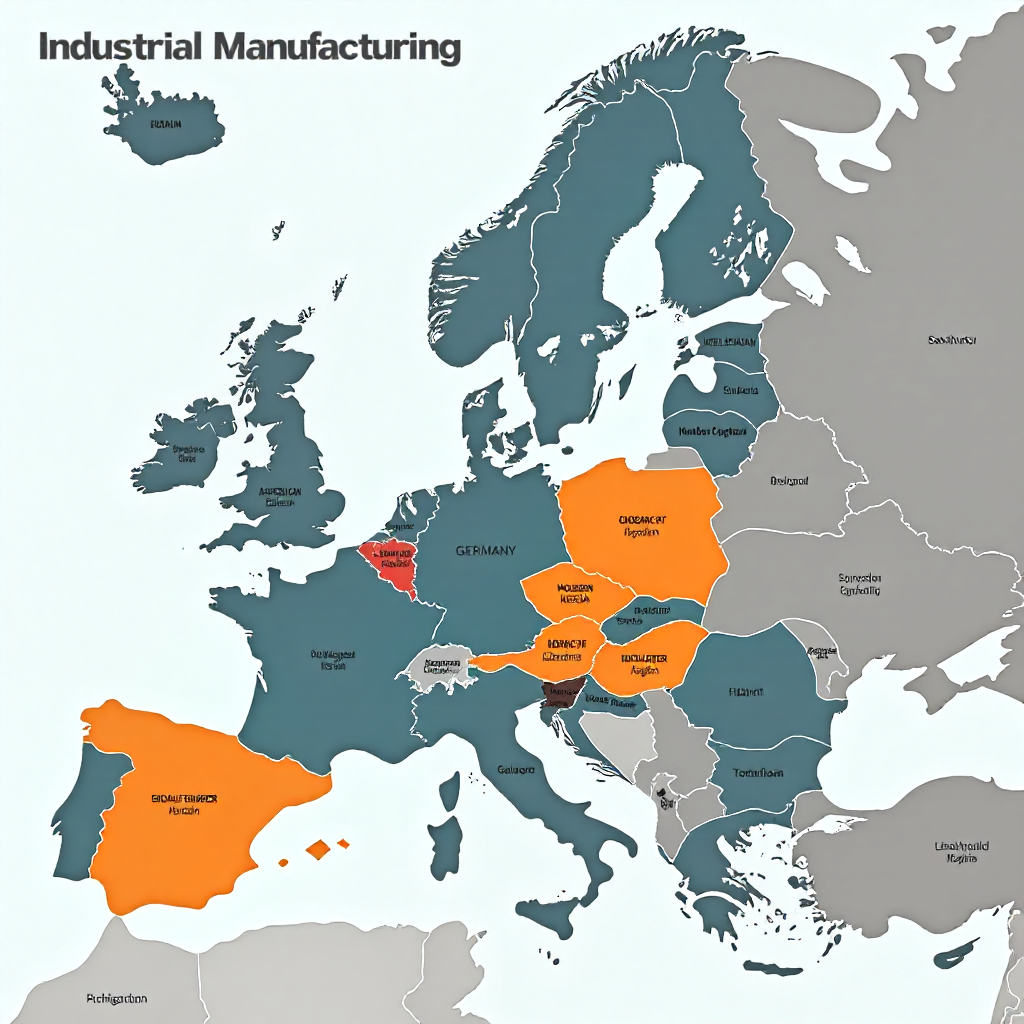
Beyond risk management, the product quality case is genuinely strong. Manufacturers in Germany, Poland, Sweden, and the Czech Republic have put serious investment into precision manufacturing, automation, and ISO-compliant production. For U.S. buyers sourcing fasteners, hydraulic components, safety equipment, or specialty tooling, European suppliers regularly meet or beat domestic quality benchmarks — often at competitive price points.
What to Look for in a European Industrial Supplier
Not all European suppliers are built the same from a U.S. buyer's standpoint. Before you lock in a sourcing relationship, a few criteria are worth evaluating carefully. The suppliers that tend to work best for American procurement teams share certain traits — and knowing what to look for upfront saves a lot of headaches down the line.
Certifications and Compliance Standards That Matter to U.S. Buyers
First thing I check is certification. ISO 9001 is the baseline for quality management in Europe — any serious industrial supplier should hold it. Depending on what you're buying, you'll also want CE marking (EU safety and environmental conformance), ISO 14001 for environmental management, and potentially IATF 16949 if automotive applications are in the mix.
These certifications matter because they feed directly into your own compliance posture. When you import goods into the U.S., what you bring in is your responsibility. Suppliers with solid quality management systems and third-party audited certifications reduce your exposure on product liability and customs classification. Always ask for the documentation — a reputable supplier will have it ready and won't hesitate to hand it over.
Logistics and Lead Times: Setting Realistic Expectations
Transatlantic sourcing needs a different mental model than domestic procurement. Lead times from Europe to the U.S. typically run 3–6 weeks by sea freight, depending on origin port and destination. Air freight is faster but significantly more expensive — it really only makes sense for urgent replenishment or high-value, low-volume shipments.
Incoterms are another spot where U.S. buyers get tripped up. Get clear on whether the supplier is quoting EXW, FOB, or CIP — that difference determines who handles export customs, freight insurance, and import clearance, and it hits your landed cost calculation directly. The best European suppliers I've dealt with are upfront about this and will work with your preferred freight forwarder without making it a whole thing.
Top European Industrial Supply Companies Worth Knowing in 2026
Europe has a deep bench of industrial suppliers across dozens of categories. What follows is a focused look at some of the regions and companies U.S. procurement teams should have on their radar this year. Not an exhaustive directory — more of a starting point for building a more diversified supplier base.
Poland — An Emerging Hub for Industrial Components and Fasteners
Poland has turned into one of Europe's more dynamic manufacturing economies, and it's increasingly worth the attention of U.S. buyers who want competitive pricing without giving up EU-standard quality. The country has pulled in serious investment in precision manufacturing, metalworking, and industrial components over the past decade, and it shows. Polish suppliers come with a skilled engineering workforce, modern production facilities, and full EU regulatory compliance — which means the products you receive are built to specs that translate cleanly into U.S. market requirements.
One company worth putting on your radar is bison-polska.pl — a Polish industrial supplier with a product range that's relevant to international buyers, including U.S. procurement teams sourcing fasteners, anchoring systems, and related hardware. They're the kind of mid-sized European specialist that often gets passed over for large multinational distributors, but can deliver real value in product focus, pricing, and direct communication. If your business sources industrial hardware or construction-related components, they're worth a closer look.
Beyond individual companies, Poland's broader industrial cluster — centered around Warsaw, Wrocław, and Poznań — covers hundreds of manufacturers across machined metal parts, safety equipment, and electrical components. It's a region I'd push any U.S. sourcing team to explore seriously in 2026.
Other European markets worth watching: Germany (precision engineering, hydraulics, automation components), Sweden (cutting tools, specialty steels, mining equipment), the Czech Republic (pneumatics, bearing systems, industrial valves), and Italy (fluid handling, industrial textiles, custom fabricated parts). Each has distinct strengths, and the right fit depends on your product category and volume.
How to Start a Sourcing Relationship with a European Supplier
Starting a cross-border sourcing relationship is pretty straightforward once you know the process. Begin with direct outreach — most European industrial companies have English-speaking sales or export teams, and they respond well to professional, specific inquiries. Vague requests get vague responses. Lead with your technical requirements, anticipated volumes, and timeline, and you'll get much better engagement.
Request samples early. Most reputable suppliers will accommodate sample requests for serious buyers — sometimes at no cost, sometimes for a small fee plus shipping. Don't skip this step. Evaluating physical product quality before committing to a purchase order is non-negotiable for industrial components.
MOQs are worth negotiating, especially for initial orders. European suppliers understand that new relationships start small and often have more flexibility than their published terms let on. Be upfront about your business and your growth potential — that context matters in European business culture, where long-term relationships carry real weight over transactional wins.
For discovery, platforms like Europages, Kompass, and industry-specific trade directories are solid starting points. European trade fairs — Hannover Messe, Fastener Fair Global, LogiMAT — remain excellent venues for meeting suppliers face-to-face or virtually. A freight forwarder with European experience is also worth bringing in early. They can advise on customs requirements, help sort out Incoterms, and manage the logistics complexity while you focus on the commercial side.
Common Mistakes U.S. Companies Make When Sourcing from Europe
I've watched enough sourcing projects go sideways to know where things usually break down. The most common mistake? Underestimating lead times. U.S. buyers used to domestic replenishment cycles sometimes treat European lead times as a problem to fix rather than a variable to plan around. Build buffer into your inventory model and you'll dodge most of the fire drills.
VAT and import duties catch people off guard regularly. European suppliers often quote prices exclusive of VAT — which doesn't apply to export transactions — but customs duties on the U.S. import side absolutely do. Make sure your landed cost model accounts for HTS classification, applicable tariffs, and customs brokerage fees before you finalize anything.
Skipping supplier audits is easy to rationalize and hard to recover from. A video call and a certificate don't tell you what a supplier's actual production capabilities and quality controls look like. For meaningful sourcing relationships, a third-party audit or an in-person factory visit is worth the investment. Full stop.
And don't underestimate the specs conversation upfront. European engineering standards — DIN, EN, ISO — don't always map one-to-one with ASTM or ANSI. Clarify dimensional tolerances, material grades, and testing requirements before production starts, not after a shipment arrives that doesn't fit your application.
The Bottom Line — Building a Resilient Supply Chain with European Partners
The argument for European sourcing in 2026 isn't about chasing the lowest unit cost. It's about building a supply chain that holds up when conditions turn difficult — and they always do, eventually. European suppliers bring quality consistency, regulatory alignment, and supply chain transparency that pay off over the full lifecycle of a sourcing relationship.
The companies I've covered here — Polish industrial specialists, German precision manufacturers, and others — represent a slice of what's genuinely available to U.S. buyers who put in the time to build these relationships properly. The upfront effort is real. But so are the returns: more predictable lead times, fewer quality escapes, and a supplier base that isn't concentrated in one geography or geopolitical risk zone.
My advice for any U.S. procurement team reading this: start with one category. Find two or three candidate suppliers in Europe, run them through a real qualification process, and build from there. Supply chain resilience doesn't happen in a quarter — it's built through deliberate, incremental diversification. European partners are a strong piece of that puzzle, and 2026 is a reasonable time to start putting it together.